


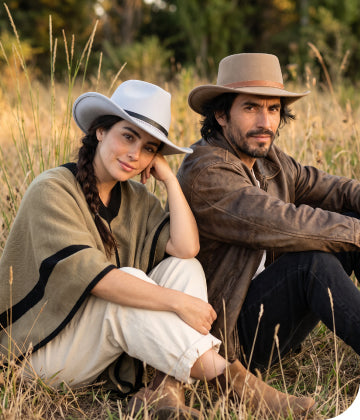
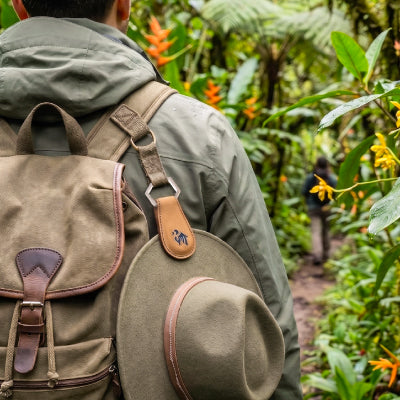




An alpaca wool Andean hat keeps you warm because of the fiber itself: soft, light and naturally insulating. After a century of working with wool, felt and straw, we can tell you what separates a good one from a forgettable one. Let us tell you what we know.

What is an Andean hat?
“Andean hat” covers two very different things. The first is the chullo, the knitted cap with ear flaps worn for centuries by Quechua and Aymara communities in the high Andes. The second is the felt hat: a shaped, structured hat made by pressing fiber into a dense fabric.
Both share the same raw material, alpaca. At Bigalli, we work with the second: felt hats that blend alpaca and wool, blocked and finished to hold their shape for years.
Why alpaca?
Alpacas live at altitude, where the air is thin and the nights are cold. Their fiber evolved for that. Three qualities matter when you wear it:
- Warmth without weight. Alpaca fiber traps air, so a hat can insulate without feeling heavy on the head.
- Softness. The fiber is fine and smooth. Many people who find sheep wool scratchy are comfortable in alpaca.
- No lanolin. Unlike sheep wool, alpaca carries no lanolin, the wax some people react to.
This is not fashion. It is a material chosen for a reason, which is how we have always chosen materials.
Alpaca vs. merino: which is right for you?
| Alpaca | Merino wool | |
|---|---|---|
| Feel | Silky, smooth, slightly drapey | Soft, springy, more elastic |
| Warmth | Very warm for its weight | Warm, with good temperature regulation |
| Structure in felt | Softer hand; blends well with wool for body | Firm and resilient; holds shape well |
| Best for | Cold, dry days; a soft, luxurious hat | Variable weather; everyday and outdoor wear |
There is no single winner. That is why many of our felt hats blend both: alpaca for softness and warmth, wool for structure and resilience.

How to spot a genuine alpaca hat
People ask us this often, and it is a fair question. Most of what is sold as “alpaca” online deserves a closer look.
- Read the fiber label. It should state the percentage. “Alpaca blend” with no figure tells you nothing.
- Check the hand. Real alpaca feels smooth and slightly cool at first touch, then warms quickly.
- Look at the finish. In a felt hat, the surface should be even and dense, with clean edges and a well-blocked crown.
- Ask about origin. A maker proud of the work will tell you where and how it was made.
- Be wary of the price. Genuine alpaca is a premium fiber. A price far below the category is a signal.
Is an alpaca hat good for cold weather?
Yes, with one condition: it must suit the weather you wear it in. Alpaca felt is at its best on cold, dry days, from autumn through winter. For wet weather, look for a felt with a water-repellent finish and a brim wide enough to shed rain.
How to care for an alpaca wool hat
A good felt hat lasts decades if you treat it with a little knowledge.
- Brush it. Use a soft brush, following the direction of the nap, to lift dust.
- Do not machine wash felt. Water and agitation will distort the shape. For knitted chullos, hand wash gently in cool water with a wool detergent, then dry flat.
- Let it dry naturally. Away from heat and direct sun, on a flat surface or hat stand.
- Store it with care. Crown up on a shelf or in a hat box, never crushed under other items.
- Handle by the brim. Pinching the crown wears it out first.
Finding your size
Hats are sized by head circumference. Wrap a soft tape around your head, snug but not tight, starting about ¾ in above your eyebrows and passing about ⅛ in above your ears. Our sizes run from Small to 2XL, from 21.2 in (54 cm) to 24.8 in (63 cm) of head circumference; the chart below shows each range. If you are between sizes, choose the larger one. We include a hat size reducer at no extra cost, so you can fine-tune the fit.
| Size | Head circumference (in) | US hat size | Head circumference (cm) |
|---|---|---|---|
| Small | 21.2–21.6 | 6¾–6⅞ | 54–55 |
| Medium | 22–22.4 | 7–7⅛ | 56–57 |
| Large | 22.8–23.2 | 7¼–7⅜ | 58–59 |
| Extra Large | 23.6–24 | 7½–7⅝ | 60–61 |
| 2XL | 24.4–24.8 | 7¾–7⅞ | 62–63 |
A hundred years of knowing the material
Bigalli began in 1926, when Ezio Bigalli Corbani, born into a family of master hatmakers in Signa, Italy, carried the craft to Ecuador. Four generations later, we still believe a hat is worth understanding before it is worth wearing. That is why we explain the fiber, the felt and the finish.
If you would like to see how it all comes together, explore our alpaca wool hats.
Frequently asked questions
Are alpaca wool Andean hats good for cold weather? Yes. Alpaca fiber insulates well for its weight, which makes it a strong choice for cold, dry conditions.
What is the difference between alpaca and merino wool for hats? Alpaca is silkier and warmer for its weight; merino is springier and holds shape well. Many felt hats blend both.
Can I wash an alpaca hat? Felt hats should be brushed and spot cleaned, not machine washed.
Do alpaca hats come in different sizes? Yes. Ours range from S to 2XL, equivalent to 54–63 cm (21¼–24⅞ in). Availability depends on what we have on hand.


